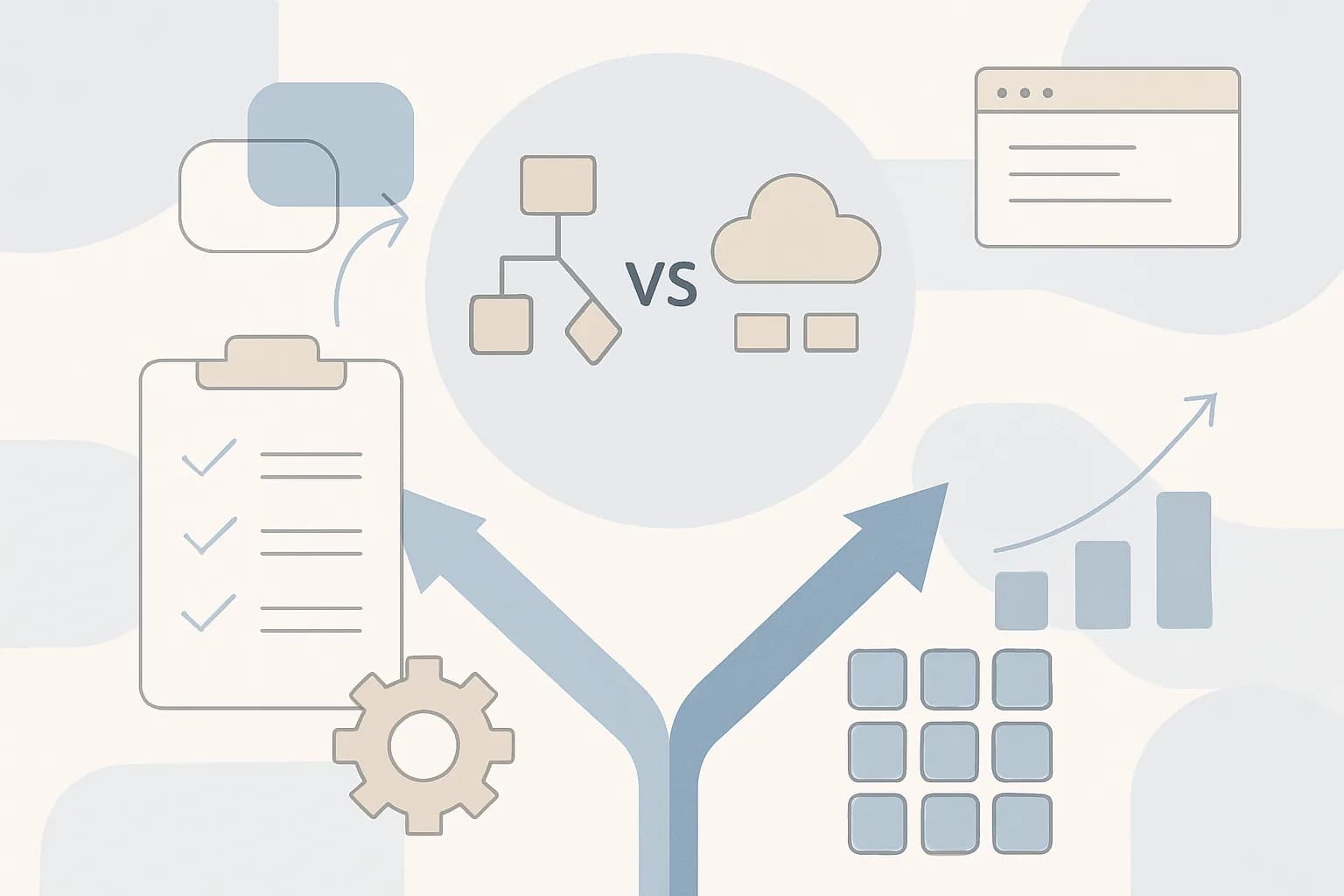
At ten people, shouting across the office still works. At twenty-plus, it does not. Work hides in side chats. Two people update different trackers. The founder still knows everything, until they do not.
Growth did not break your team. It exposed that the business still runs on memory.
The spreadsheet becomes a political object
Multiple versions circulate. People stop trusting the "master". Meetings start with reconciling numbers instead of deciding anything.
That is the signal to move operational records into one shared system with permissions and a clear owner per record.
Handoffs multiply faster than headcount
Every new hire adds interfaces: sales to ops, ops to finance, support to delivery. Without defined status and next actions, those interfaces become email loops.
Write the path for your top two workflows. Who moves the status? What triggers the next person? If you cannot answer, hiring will only add more confusion.
Tools pile up without a spine
A new app for each pain feels productive. Then nobody knows which tool is authoritative. Data gets copied by hand between them.
Do an honest audit. Keep what holds the source of truth. Integrate or kill the rest. More logos is not an operations strategy.
Fix the backbone before the next hire
If onboarding a new starter takes weeks of shadowing because "it is all in people's heads", pause hiring for a moment and document the real process.
Teams that get past twenty cleanly usually have boring strengths: one status board, clear owners, and fewer heroic saves.
Key takeaways
What to remember
The points worth carrying into your next pack cycle or process review.