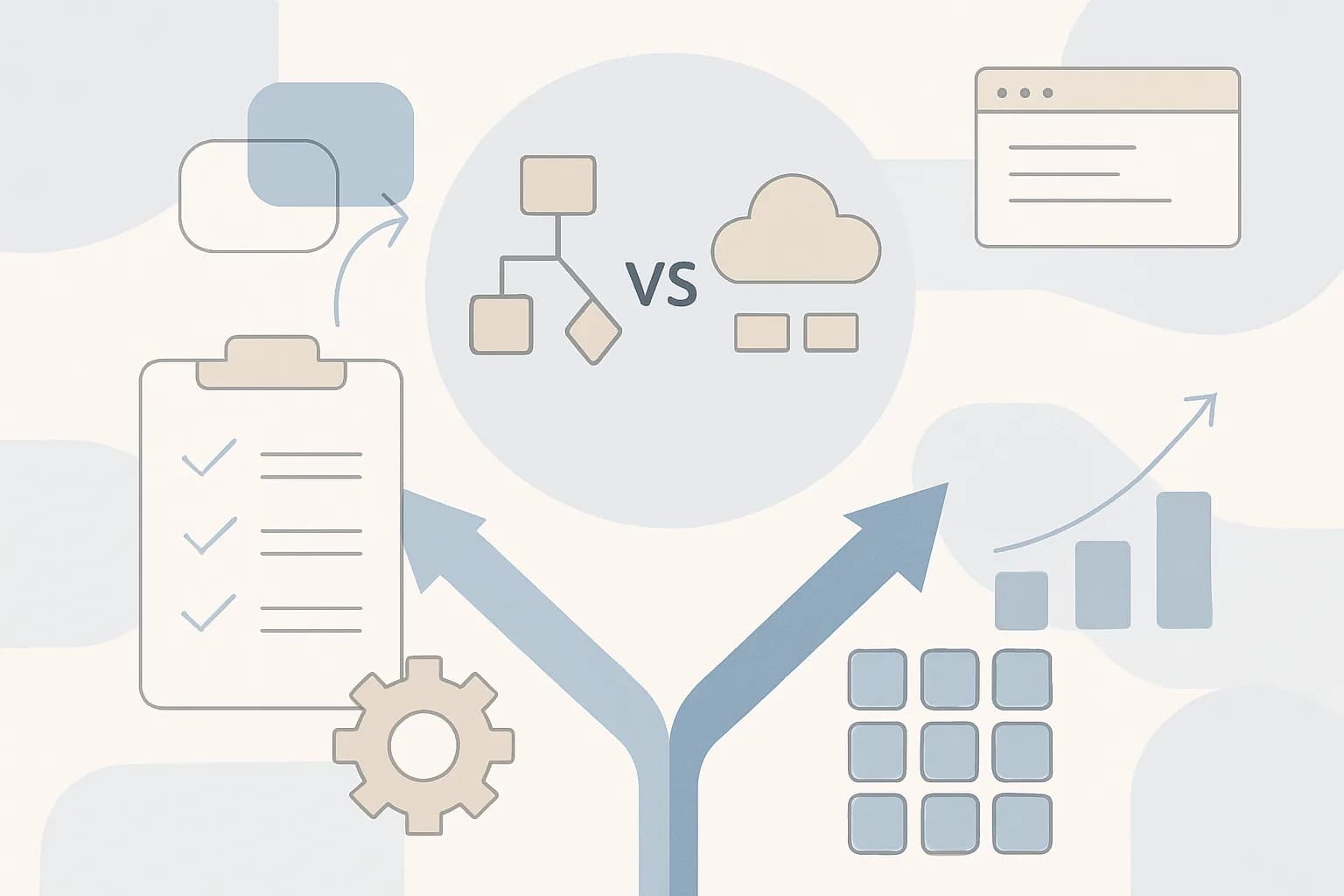
Every growing firm faces this decision: rent another monthly product, or build something that fits how you actually work. Both are valid. The mistake is choosing based on habit rather than fit.
SaaS means a monthly subscription someone else looks after. Those tools are fast to start. Custom software fits your exact workflow but costs more up front. The right answer depends on your situation, not what a competitor did.
When SaaS is the right choice
Your process is standard. If how you handle accounting, email marketing, or video calls looks like how most businesses do it, a mature SaaS product will serve you well.
Speed matters more than fit. You need something running this month, not next quarter. SaaS gets you operational immediately.
The vendor's roadmap aligns with yours. They're investing in features you'll need, and their product direction matches where your business is heading.
Total cost is predictable and acceptable. Licence fees, per-seat pricing, and add-ons still cost less than building and maintaining custom software for that function.
When custom software makes sense
Your workflow is your competitive advantage. If how you deliver, price, or serve clients is genuinely different, forcing it into a generic tool dilutes what makes you effective.
You're paying for five tools that don't talk to each other. Integration middleware, Zapier chains, and manual bridges between systems add cost, latency, and failure points. One purpose-built system often costs less over three years.
Workarounds outnumber features. Your team has built a shadow process around the tool, spreadsheets alongside the CRM, duplicate data entry, status fields used for things they weren't designed for.
Data ownership and compliance require it. Regulated industries, client confidentiality requirements, or specific hosting needs may make off-the-shelf tools impractical regardless of features.
A simple decision framework
List your top three operational pain points. For each, ask: does an existing product solve this without significant workarounds? If yes for all three, stay with SaaS.
Calculate the true cost of your current stack. Include licences, integration tools, hours spent on manual bridges, and error correction. Compare against a scoped custom build over 24–36 months.
Talk to your team. The people doing the work know where the tools fight them. Their input prevents buying another product that looks good in a demo but fails in practice.
Consider a hybrid. Use SaaS for commodity functions (email, accounting, HR) and build custom for your core operations. Most businesses don't need to build everything.
Key takeaways
What to remember
The points worth carrying into your next pack cycle or process review.